Thursday, June 28, 2012

you're worth fighting for, and so is that person...

i feel alive when i am fighting for something. 

growing up, i always thrived when someone said i couldn't do something. as soon as they had this belief or conveyed this doubt, i had this push to prove them wrong. i learned by heart a piano piece that was way above my ability for a recital. i memorized enough verses in a short time to go to camp for free. i moved a bucket of rocks at work. i have a bad memory, but these moments stand out to me clear as day.  nobody could tell me i was less than, because if they did, i proved them wrong.

as i have been growing older, this fighting to prove myself has morphed into a passion for justice. i fell in love with my first social work internship because people had been wronged. i was able to be the voice that said to victims: "you don't deserve this. that person who took advantage of you was wrong, you are valuable." i wanted justice, showing these clients humans are all equal and no one deserves to be a victim. (note: justice here is not retribution)

i care about people and justice because i feel everyone is a child of God and nobody should be treated less than.

there are so many controversies to the Obama health care plan. honestly, i have a lot of questions about it myself. but let me be clear-- i believe health care is a human right, it shouldn't be dependent on income. Children aren't expected to have an income to receive it. in the same way, i believe adults shouldn't either. Human health doesn't depend on anything like how hard you work. Someone can get sick for no reason at all. Everyone should have the same opportunity to get treatment. point blank. (note: justice here is not entitlement)

today i am reminded of my passion for justice. hopefully i can really use this passion to make a difference. and just remember, justice is what happens when you treat everyone as if they were your own grandma. tell me that doesn't put an image in your mind ;)


(note: not my grandma, this is mother teresa)

Thursday, June 21, 2012

love your neighbor as yourself


i was driving through a neighborhood i work in today and found myself sad in many ways. in front of me was a solid three blocks of row housing, all connected (the picture above doesn't do justice to what my eyes saw). behind it in an alleyway was another set, and across the street was yet another 3-block set. at this point, all of them are boarded up, unused. as you can imagine, it is probably for the best they are not inhabited anymore. at some point these were very low income housing for numerous souls. it's sad for me to not only see that there was at one point such a need for them, but also to know there is such a need for them now. i am constantly looking for places that are low income for my clients to snatch up. if there was a way to renovate these row houses, they would fill up in a minute. i dont care that it's one of the worst neighborhoods in pittsburgh. I have a case load of people who just want a roof over their head, simple living quarters, and something that doesn't take all their income. people have lots of views/opinions as to why a homeless person is homeless, but what really matters is helping them get it back. we have got to set aside our predispositions and just help. it is a sad and lonely world when we forget about our neighbors, our poor.

Friday, June 15, 2012

harvesting- the only thing a farmer does?

Think about all the things that must happen before
there can be a good harvest of crops.
  • First, someone has to go and prepare the land. This is backbreaking work that involves felling trees, pulling massive stumps out of the ground, extracting rocks and boulders from the field, and moving them aside. But there's no harvest yet.
  • Next the soil has to be broken up. The earth needs to be plowed, fertilizer churned in with the soil, and orderly rows tilled to prepare for the seed.
  • Then the seeds must be carefully planted and covered. But still no harvest. Perhaps a fence needs to be built to protect the plants from animals that might devour them.
  • And always, the seedlings must be carefully watered, nurtured, and fed over the long growing season.
There are sometimes setbacks--bad weather, blights, floods, and insects-- that can jeopardize the harvest. But if all the hard work is done faithfully and with perseverance, and if God provides good seed and favorable weather, finally a glorious harvest is the result.*1
- Excerpt from The Hole in Our Gospel

As I took another round trying to get through this spiritual book, the above stood out to me. It probably has nothing at all to do with the fact that Shawn is away harvesting all summer... ok it probably does ;) But the author surprisingly spoke to me. It's easy to think we should see results right away. For example, one church service should have a great enough impact on somebody to bring them to their knees asking for Christ to come into their heart. In reality, as the Barna group proves, this only happens for about 6% of adults.*2

I have never been the kind of person who could sit down with someone and easily convince them via the Romans road. As a "retired" camp counselor, this technique was expected of us. I am more the kind of person that works on the first stages of the harvest. I am not afraid to go to unprepared lands and start the back breaking work. This usually means jumping into something new and building relationships. Taking the time to get to know someone, listening to their story, hearing their struggles and triumps with the hope that in time they will eventually see the fruits of God and seek Him.

I think it is easy to assume being a devoted Christian is defending and proclaiming our faith daily, and just as easy to assume the less devoted Christian is one just "living out" their faith and not necessarily being vocal. Don't get me wrong, there's a lot to say about evangelism, and there's a lot to say about complacent Christians. But reading this passage, I am reminded that alongside evangelists, you need people actively preparing for a crop. I'd say my most natural ability is the slow routine of working to create a harvest, not harvesting. Who knows, this very well could change in the future. But for now, find me in the cultivating, planting, and growing seasons. ;) Blessings~


*1 The Hole in Our Gospel, p.19
*2 UnChristian:What a New Generation Really thinks about Christianity ...and Why it Matters p.72

Thursday, May 31, 2012

joy time

so it's hard to write when I feel uninspired, and I have felt that way a lot recently. more than likely the whole religions challenge was a way to get inspired. it was good for a bit to challenge my mind, and I am not saying I am giving up on it, but I will say I have found inspiration once again.

so you should all know my job and how challenging it is to find joy, simply for the fact that it's a hard job-- working with people who have gotten caught between a rock and a hard place and that sucks! point here being, every day has a new crazy story about how unfair life is, and this is draining.

I kick myself in the butt a lot because my natural reaction is sympathy, I try and want to be compassionate. I see the person sitting down with me and start agreeing with them that life does indeed suck, that they don't deserve this thing happening to them! seriously, you wouldn't believe these stories and how crappy systems can be! but taking on others emotions every single day is draining. 

am i repeating myself? yes. this is my cycle, and that cycle keeps me down unfortunately. this week i chose to be positive. let me tell you straight off, i did get pissed off this week, i did complain, and i did get drained, but i kept returning to my choice to be positive. in seeking joy, what happened?

one saved message (my office mate saves messages if she gets to mine before i do). this message was an old client just calling to say thanks. to say thanks.

and a long time coming success story. here's the story. A guy younger than I served two tours and ever since has been pretty messed up, living street homeless and not wanting any help. The case manager before me couldn't get him to into services, I tried too and then decided to quit and just talk to him. He was willing to talk, unwilling for advice, so what the heck. I talked to him a little each week for almost probably a year now, never anything too deep. Out of the blue this Tuesday he brought up wanting mental health services! unfortunately, our MH doc wasn't going to be there till Thursday. (If you know anything about my work, you know if you don't get the person "in" the day of their decision to move forward, you miss your chance. truth.) So along came Thursday (today!) and there he was. He still wanted to move forward and chose to talk to some of the other clinicians as well! no matter what happens the coming weeks with him, this is a success story

so when you're down and out, force yourself to find joy. it wont happen right away, probably wont happen how you expect it, but God is faithful. just keep praying. catch you soon :)

Wednesday, April 4, 2012

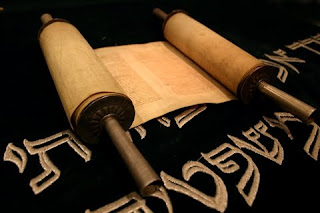
month three: Judaism in America

As I decided to look into Judaism in America today, I didn’t realize how deep of shoes I was sinking into. There were so many avenues I could venture, from types of Jewish religions; Orthodox, Reformed, Conservative, Reconstructionist, Zionist; to beliefs then and now with traditional Jews verse less traditional Jews. But after wading through all these sectors, I couldn’t help but see the focus on Jews religiously, culturally, and ethnically. It seems anyone trying to describe the religion today had to describe these three things together. I think the most I learned about Judaism wasn’t about beliefs, but the culture that has developed in America. 
 
I read a very unorthodox (no pun intended) book called Jews Without Judaism (Friedman) which I have no doubt many religiously Jewish people would be very offended by. Let’s just say the author is a rabbi who pointedly says there is no god. Despite this interesting fact that comes up later in the book, the rabbi has a lot of insight on how Jews have developed and changed over time. Understanding this development is probably the best way to understand 21st century Judaism in America. Learn along with me as the author opens up the idea of Judaism being more a culture than a religion and explains how it got to this point today:

It’s hard to find words that accurately describe what being Jewish means. It has to do with a sense of being part of a long history; of being part of a people, the Jewish people, that is like an extended family with “branches” all over the world and reaching back many centuries into the past. It means feeling connected to other Jews, even though one may not speak their language or even agree with their religious beliefs. p25

Today most Jews are not religious. They may observe a Jewish holiday once in a while, although even when they do, it’s more to express their Jewishness—their membership in the Jewish people—than to “practice” Judaism. They may even belong to a synagogue or temple—again, more to connect with other Jews than to worship. p26

Prior to the seventeenth or eighteenth century, there was no distinction in the minds of Jews between religion and the rest of life. There was not even a word for “religion”. Nor was there a word for “Judaism.” Being a Jew was to be part of God’s holy people. It was to be bound by the covenant between God and his people. It was to be obligated to observe the mitzvot, the divine commandments, as they are revealed in the Torah and the Talmud. There was no distinction, as there is today, between the religious and the secular. Jews may have been more or less observant, but there were no nonreligious Jews. p36

(The split between Jewishness and Judaism came about because of) two things: first, the Enlightenment and the enormous changes in the conditions of life and thought that followed—changes that undermined the essential assumptions of Judaism; second, Napoleon…Napoleon affected Jewish life in a profound way… after his military victories were achieved, Napoleon was concerned about the disparate groupings within the new French nation. He wanted to secure their loyalty. He did not want people, such as the Jews, to think of themselves as separate entities with their own laws, their own culture, their own loyalties to anything other than France. He knew very well that the Jews functioned as a “nation” within the larger French nation. He wanted to eliminate such “foreign” nationalities in order to create a single French nation, with all its citizens loyal to the state. So in 1806 he called a meeting of over one hundred Jewish notables of France and presented them with a number of questions designed to clarify what it meant to be Jewish and what the relationship was between the Jews and the state. The primary question was: Were the Jews a separate nation or a religious community? …In answering Napoleon, in effect, they redefined themselves…they split into two what was previously one: the public and the private. p37-8

The author develops into thought that separating the two has allowed freedom that wasn’t there before. Exciting in many ways, but the laws and practices were no longer a lifestyle. Jew’s had a nation to be a citizen in and a religion to rely on. Making Jews be a citizen of a nation and be Jewish semi-destroyed the whole essence of Judaism. This is what I found the most interesting and “ah ha!” of my study.

Nonetheless, these still remain (plus much more, as always):

Tanakh is the Hebrew Bible, which is also termed the Old Testament in Christian bibles. This includes the Pentateuch, which are the first five books, the books of Moses; and the Talmud, which are the books of the prophets. The Judaism faith is focused on the commandments and a covenant made with the one true God.


As for God, Jews are “ever watchful to guard the uniqueness of God, they will not represent God in any material form; to do so would be to make an idol. Nor is there any way, in the Jewish understanding of God, that any human being could ever be God. This is one reason that people of Jewish faith do not accept the Christian teaching that Jesus is the Messiah” (p200, Religion in America). This is probably the most obvious in religion differences today.

When it does come to traditional Jews vs. less traditional, two things stood out to me. Traditional Jews are still focused on a coming messiah, foretold in Isaiah. Less traditional Jews have developed that belief into more of an attainment of a messianic age. And while traditional Jews continue to struggle with understanding how evil exists despite an all-good God, less traditional Jews have come to believe in God who is limited in some ways. In the end, most Jews tend to focus more on life in the here and now, leaving what happens afterward in the hands of their Maker. Beliefs land that one day all Jews with be with God.

Judaism: more than a religion. It's the essence of religion, culture, and ethnicity combined.
Wednesday, March 7, 2012

month two: jehovah's witness


Jehovah's Witness. Whenever I mention that phrase the reaction seems to always be the same: a taken a-back “oh”. As if simply mentioning their name is the first crime. The second is they don’t celebrate holidays. The third is they are strangely focused on “the end of time” or Armageddon from the book of Revelations

As I have been studying the Witnesses, or Zion’s Watch Tower and Tract Society, I can see they are very passionate. They come out of a bible study movement in Pittsburgh, desiring to know the Word. Even their title “Jehovah’s Witnesses” comes straight from the bible, based on Isaiah 43:10–12. Witnesses are best known for their door-to-door preaching like Morman’s, distributing literature and tracts, refusing military service like Mennonite’s, and not taking any sort of blood transfusions for fear it counts as consuming blood (a law clearly stated in the bible). Also like the Mormon’s, they reject the idea of the trinity. The most extreme ideas are that other’s sinful nature could corrupt them, so they do not like interaction with non-believers unless they are witnessing. The three strongest allies to Satan are government, big business, and churches (because they teach false doctrine). All are untrustworthy and should not be saluted (pledge of allegiance to the flag), encouraged (voting), or partaken in.

Jevohah’s Witnesses have very strong morals, and any form of sidetracking the rules brings about disfellowshiping, very similar to Amish shunnings. Witnesses believe that churches are idols, so they never enter them. Their meeting place, instead, is called a Kingdom Hall and it is always built by the hands of the congregation. Witnesses find constant bible study important, so they meet several times a week at their kingdom halls. Bible study is the key to everything since they believe everything that is being revealed is through the bible, the living word. Witnesses do not have pastors, priests, preachers, saints, etc. They all gather together and teach each other-- remember this comes out of bible study practices. Of note, woman must go up front and speak to another person on the stage, they cannot interact directly with the crowd. Witnesses have very traditional male and female roles.

In the end, what matters is the end of the world, the righteous being spared from disaster, the 144,000 that will live with the Father, and the rest of the witness who will inherit the restored world. Just wait and proclaim for that day.

A book I read that I would recommend is "I'm Perfect, You're Doomed: Tales from a Jehovah's Witness Upbringing" by Kyria Abrahams.

Friday, February 17, 2012

short devotional


Hippies. Tree huggers. Environmentalists. All of these terms immediately create images in our minds, and most often put a very negative taste in our mouth concerning nature. Spiritual life week at Bluffton University has been about Connect 4, that is connecting with God, ourselves, others, and nature (creation). It’s easy to relate to the first three, but can one genuinely connect to creation on a daily basis? Does finding a connection with creation require drastic life changes? What does it mean to have a healthy relationship with, or a connection to creation?


A word probably completely overlooked above is “with” (go ahead and look for it now, I know you’re itching to). “With” is a word that has continued to surprise me in many ways. Taking time to understand “with” implies belonging, companionship, comradery and a sense of contentment as well. God wants to be with you. God wants you to be with Him. “With” also reminds us to be present in the lives of others, to enter into their hurts, joys, sufferings and accomplishments. Finally, “with” asks us to slow down, to observe what is around us, and to care for what is at hand without worrying too far in advance.


How does “with” look to you when it comes to creation? It could be as easy as sitting outside watching the world pass by, letting God speak through observation and being still. Maybe the whole point of being with creation has been something we missed due to our busy routines. Though we all have work to do, when was the last time you slowed down and were with creation? The saying goes, “places to go, people to see”, but why not for a change just be.


*credit to shawn yoder who wrote a solid portion of this for spiritual life week.